Tag: Regulation & Policy

  • White House Silence Stalls CLARITY Act

    White House Silence Stalls CLARITY Act

    White House Silence Stalls CLARITY Act Progress

    The White House has failed to respond to a critical counterproposal regarding the CLARITY Act, casting further doubt on the legislation’s prospects, according to a report by journalist Eleanor Terrett.

    The development comes after supporters had anticipated significant movement over the weekend. Earlier this week, Senators Thom Tillis and Ruben Gallego had advocated for enhanced ethics provisions, proposing that state attorneys general be empowered to enforce laws against federal officials.

    However, Terrett updated on Monday, citing a source familiar with the matter, that the White House has not yet provided a response to this counterproposal. “A deal on the CLARITY Act’s biggest outstanding issue has yet to materialize heading into the week of a potential vote,” she stated.

    The likelihood of the legislation’s approval continues to diminish amid the lack of tangible progress. Current assessments from Washington experts and prediction markets indicate that the probability of the bill passing has fallen to 28%, a significant drop from approximately 70% earlier this year.

  • White House Operator No Longer Employed Amid Prediction Market Betting Allegations

    White House Operator No Longer Employed Amid Prediction Market Betting Allegations

    A White House teleprompter operator, Gabriel Perez, is no longer employed by the federal government following allegations that he used insider knowledge to place bets on prediction markets, potentially earning over $100,000. Perez had been placed on unpaid leave earlier this month after the allegations surfaced.

    Kalshi, the prediction market platform where the alleged bets were placed, detected the trades, investigated them, and referred the matter to the U.S. Commodity Futures Trading Commission (CFTC). Robert Denault, Kalshi’s lawyer and head of enforcement, stated that the trades amounted to political insider trading under the platform’s CFTC-approved rules.

    It is uncertain whether Perez resigned or was fired, and the precise amount of money he may have profited from the alleged bets is not definitively established. The White House has not provided further comment on the matter.

    Broader Regulatory Landscape

    This incident occurs within a broader context of increasing regulatory scrutiny and legal challenges surrounding prediction markets. Kalshi has faced legal hurdles in several states this year, including Massachusetts, Michigan, Nevada, and Washington. In April, the platform suspended three political candidates for betting on elections in which they were participating, after determining the trades constituted political insider trading.

    Separately, federal prosecutors charged U.S. soldier Gannon Ken Van Dyke with allegedly betting on whether former Venezuelan President Nicolás Maduro would be removed from power. Authorities stated that Van Dyke, who reportedly worked on the operation targeting Maduro, made approximately $400,000 from these trades. The exact earnings of Gannon Ken Van Dyke are subject to confirmation.

    In a related development, a federal judge has temporarily blocked Minnesota from enforcing a new law that would have banned prediction markets in the state. Judge Katherine Menendez stated that the law is likely preempted by the federal Commodity Exchange Act, as many event contracts may qualify as federally regulated swaps. The law, signed by Governor Tim Walz in May, was scheduled to take effect on Saturday. The future scope of the injunction against Minnesota’s law is also uncertain.

    The judge’s ruling provided a temporary reprieve for platforms like Kalshi and Polymarket as the legal case progresses. The injunction could potentially be narrowed in scope at a later stage.

    Uncertainties Remain

    Several uncertainties remain regarding the case. It is not yet clear whether Perez resigned or was fired, nor is the precise amount of money he may have profited from the alleged bets definitively established. Similarly, the exact earnings of Gannon Ken Van Dyke are also subject to confirmation. The future scope of the injunction against Minnesota’s law is also uncertain.

    The situation highlights the evolving regulatory landscape for prediction markets, which are facing both internal rule tightening and external legal challenges, alongside allegations of insider trading involving individuals with access to potentially sensitive information.

    Why This Matters

    The materials describe a narrow update: Gabriel Perez, a White House teleprompter operator, is no longer employed by the federal government. Whether Gabriel Perez resigned or was fired.

  • Meta’s ‘Pervert Glasses’ Spark Controversy

    Meta’s ‘Pervert Glasses’ Spark Controversy

    Meta’s Smart Glasses Face “Pervert Glasses” Backlash Amid Privacy Concerns

    Meta is developing AI-powered smart glasses designed to serve as a smartphone replacement. However, these devices are increasingly being labeled “pervert glasses” online, and for understandable reasons.

    Despite Meta’s inclusion of privacy protections in the glasses’ design, critics are raising alarms about their potential misuse and data handling practices.

    Growing Public Apprehension

    The backlash against AI-powered glasses is so significant that users are reportedly hesitant to wear them in public.

    Genesis of the “Pervert Glasses” Moniker

    The controversy surrounding Meta’s AI glasses, and the origin of their unflattering nickname, stems from several concerning incidents.

    In January, a BBC investigation revealed that women were being secretly filmed with Meta’s Ray-Ban smart glasses after being approached in public. These videos were subsequently posted to TikTok without consent, garnering hundreds of thousands of views and comments. The BBC identified one account that had shared over 100 similar videos.

    A joint investigation by Swedish newspapers in February uncovered that contractors in Nairobi, hired to train Meta’s AI, reviewed footage captured by the smart glasses. This footage reportedly included individuals using the bathroom, undressing, changing clothes, as well as credit card numbers and intimate moments, reigniting concerns about how such sensitive data is shared with Meta’s AI systems.

    In March, Meta was hit with a class-action lawsuit alleging that the company failed to adequately disclose that human contractors could review content shared with Meta AI. Later that month, Democratic senators Edward Markey, Jeff Merkley, and Ron Wyden questioned the company regarding its reported facial recognition plans, warning that such technology could facilitate real-time identification, stalking, and harassment.

    Calls for Abandonment of Facial Recognition

    The ACLU, along with 75 other organizations, urged Meta in April to abandon plans to integrate facial recognition into future versions of the glasses, deeming it “a red line society must not cross.” This coalition cautioned that the technology could enable wearers to identify strangers in public and link them to personal information.

    The following month, Texas Attorney General Ken Paxton launched an investigation into Meta’s AI glasses, citing concerns that the devices could secretly record individuals, collect facial data, and mislead consumers about the use of their personal information.

    Attempts to Address Recording Concerns

    In July, Meta updated its Ray-Ban smart glasses after users discovered methods to bypass the recording indicator light that signals when the camera is active. The update is designed to disable the camera if it detects tampering with the light, as part of a broader effort to prevent covert recording.

    However, this update did little to quell the public outcry. In the same month, advocacy groups, both online and in major cities like New York, London, and Washington, initiated campaigns highlighting the privacy implications of the devices.

    Regulatory and Event-Based Scrutiny

    By the end of July, Police Scotland opened an investigation into a TikToker, Scott Margerison, accused of secretly filming people with Meta smart glasses. To safeguard attendees, event organizers such as Comic Con (Monopoly Events) and DEF CON have banned the devices from their venues due to privacy concerns.
  • CLARITY Act Faces Critical Weekend as Ethics Negotiations Continue, Passage Odds Uncertain

    CLARITY Act Faces Critical Weekend as Ethics Negotiations Continue, Passage Odds Uncertain

    The CLARITY Act faces a critical weekend as ongoing negotiations over its ethics provisions have coincided with a decrease in the perceived probability of its passage this year. With the Senate scheduled to begin its August recess next week, the current timeframe is crucial for the bill’s advancement.

    According to prediction markets, the CLARITY Act currently has a 31%-35% probability of becoming law this year, a significant drop from its peak of 70% earlier in the year. Eleanor Terrett noted on X that this weekend represents a “high-stakes waiting game” for supporters of the legislation.

    Ethics Provisions and State Attorney General Authority

    Negotiations are reportedly focused on the ethics provisions and the authority of state attorneys general. Political disagreements and new ethics proposals have contributed to the declining odds. A counteroffer from the White House, which includes provisions related to state attorneys general, is currently under consideration. This proposal reportedly centers on whether state attorneys general should retain authority in enforcing certain ethics provisions involving federal officials.

    Bipartisan negotiations are continuing between Senator Thom Tillis and Ruben Gallego. Both lawmakers believe the bill requires a stronger ethics package than initially proposed. Sources familiar with the matter indicate that Tillis, Gallego, and other Democrats did not approve of the initial offer, advocating for state attorneys general to have the ability to sue the Department of Justice if it fails to enforce ethics laws against federal officials.

    Uncertainty and Future Prospects

    There are few clear indications regarding the next steps for the ethics provisions. If lawmakers do not advance the bill before the upcoming recess, its prospects are likely to deteriorate further as political attention shifts towards the midterm elections.

    Many key figures in the cryptocurrency industry have expressed support for the bill. Michael Saylor, Chairman of the world’s largest corporate holder of bitcoin, believes that America needs clarity for digital assets and stated that Bitcoin may succeed with or without legislation. He reiterated this stance in the past 24 hours.

    The White House proposal reportedly includes a duration for ethics provisions extending to January 2029. However, uncertainties remain regarding the acceptance of the White House’s counteroffer, the specific details of the state attorney general’s role, and the long-term implications beyond 2029. The ultimate outcome of the CLARITY Act’s passage remains uncertain.

    Why This Matters

    The materials describe a narrow update: Negotiations are ongoing for the CLARITY Act, focusing on ethics provisions and the authority of state attorneys general. Whether the White House’s ethics counteroffer will be accepted remains uncertain.

    Broader Context

    Source materials place the factual news in this context: The CLARITY Act is a highly anticipated regulatory bill.

  • Suno AI Loses German Copyright Lawsuit

    Suno AI Loses German Copyright Lawsuit

    German Court Rules Against AI Music Startup Suno in Copyright Case

    A German court has ruled against AI music startup Suno, siding with music rights organization GEMA in a copyright infringement lawsuit. The Munich Regional Court determined that Suno violated copyright law by utilizing music from GEMA’s catalog to train its artificial intelligence models and by reproducing protected works without the necessary licenses.

    The ruling mandates that AI companies must secure licenses for the commercial use of GEMA’s repertoire, encompassing both the training of AI models and the subsequent generation of music.

    The legal challenge specifically focused on six songs, including well-known tracks like “Daddy Cool,” “Rasputin,” “Forever Young,” and “Mambo No. 5.” GEMA had accused Suno of training its AI on these copyrighted songs without obtaining prior permission.

    In response to the verdict, Suno stated that its platform was designed to assist users in creating original music, rather than replicating existing songs. The company expressed its belief that the ruling stems from a misunderstanding of its technology’s operational principles and indicated it is exploring its legal recourse.

    “Our tools empower individuals to create new songs, whether they are established artists, product developers, songwriters integrating our tools into their workflows, or everyday music enthusiasts,” Suno said in a statement. “From inception, we trained our models to generate new songs, not to reproduce existing ones, and have implemented safeguards within our platform. We disagree with today’s ruling, which is based on a fundamental misrepresentation of how Suno’s technology functions, its application, and the relevance of U.S. law. We are currently evaluating all available options, including an appeal.”

    This decision follows a similar copyright victory for GEMA approximately eight months ago against OpenAI. In that case, a Munich court found that ChatGPT had unlawfully reproduced copyrighted song lyrics.

    The current ruling also arrives as Suno faces increasing legal scrutiny regarding the methodology behind its AI model development. Earlier this month, leaked source code revealed that the company’s training data included over 113,000 hours of YouTube Music, 62,000 hours from Pond5, and 12,000 hours from Deezer. This information lends support to claims from the music industry that Suno trained its AI on copyrighted recordings without authorization, allegations that the company continues to contest in court.

  • FCC Implements Restrictions on Advanced Robots and Power Inverters Due to National Security Concerns

    FCC Implements Restrictions on Advanced Robots and Power Inverters Due to National Security Concerns

    The U.S. Federal Communications Commission (FCC) has added foreign-made advanced robotic devices and connected power inverters to its “Covered List,” a regulatory action driven by national security concerns identified by U.S. agencies. This move effectively prevents new models of these devices, particularly those originating from China, from receiving FCC equipment authorization, a necessary step for their import, marketing, and sale in the United States.

    The FCC’s decision, reported earlier this week, targets internet-connected robotic devices weighing over 4.4 pounds that can view their environment. This includes a range of products such as robot vacuums, humanoid robots, and quadruped robots. Connected power inverters, crucial components in energy systems, are also included in the expanded list. According to the FCC, U.S. national security agencies have determined that these products pose unacceptable security risks.

    The “Covered List” identifies communications equipment that the U.S. government considers a threat to national security. Products on this list generally cannot receive new FCC equipment authorization. This restriction applies only to future device models seeking approval, meaning previously authorized products and devices already owned by consumers are not affected. Manufacturers can seek FCC authorization for devices if they receive conditional approval from the Department of Defense or the Department of Homeland Security.

    National security agencies have raised concerns that these internet-connected devices could create supply chain weaknesses and cybersecurity risks. Potential vulnerabilities include the collection of sensitive data, the ability to monitor individuals, and the risk of remote takeover by malicious actors. For connected power inverters, concerns include the potential to disrupt critical infrastructure like the power grid, steal data, or provide unauthorized access to vital systems.

    This action by the FCC is part of a broader U.S. effort to secure critical supply chains and mitigate potential cybersecurity threats from foreign technology. The move follows findings by a White House-convened interagency group. While the specific national security agencies that made the determination have not been detailed, the FCC’s action aligns with a growing focus on securing technology beyond traditional defense applications.

    The restrictions could have implications for the global robotics market and innovation, particularly as China accelerates its development in areas like humanoid robotics. Companies such as Alibaba and Unitree have been noted for their advancements in this sector. The exact scope of ‘advanced robotic devices’ beyond the stated weight and connectivity criteria remains a point of uncertainty, as do potential retaliatory measures from China. However, the FCC has clarified that the restrictions are not a complete prohibition on all robots and do not make existing devices illegal to use or sell.

    Broader Context

    Source materials place the factual news in this context: The FCC’s action comes as China races to become a global leader in humanoid robotics.

  • Circle Obtains Limited Purpose Trust Charter from NYDFS

    Circle Obtains Limited Purpose Trust Charter from NYDFS

    Circle has secured a limited purpose trust charter from the New York Department of Financial Services (NYDFS), enabling it to operate under the name Circle New York Trust. This regulatory approval is a key development in the company’s strategy to enhance its operational framework for digital assets within the United States.

    The newly chartered Circle New York Trust will be supervised by the NYDFS. The entity is authorized to hold digital assets for customers and function in a fiduciary capacity, as permitted by New York banking law. It is important to note that a limited purpose trust company, unlike a traditional bank, cannot accept customer deposits or issue loans.

    This charter represents an expansion of Circle’s existing regulatory standing in New York, building upon the BitLicense it was granted in 2015. Circle CEO Jeremy Allaire described the acquisition of the trust charter as a long-standing objective and a significant milestone. “This charter reflects over a decade of regulatory commitment and positions USDC within a strong, respected framework as digital dollars become central to the global financial system,” Allaire stated.

    The NYDFS charter is the latest in a series of strategic regulatory and operational moves by Circle. Earlier in the month, the company received approval from the Office of the Comptroller of the Currency to establish a national trust bank, a move that allows Circle to integrate key USDC operations into a federal banking framework and offer digital asset custody services.

    Furthermore, Circle recently acquired nearly 1,000 blockchain patents from IBM. The company intends to leverage this portfolio across its USDC stablecoin, the Circle Payments Network, and its Arc blockchain.

    In reaction to the news of the NYDFS charter, Circle’s shares rose 8.4% on Friday, trading around $68.40, according to Yahoo Finance.

    Collectively, the NYDFS trust charter and the recent OCC approval underscore Circle’s commitment to strengthening its market position in the digital asset sector through robust regulatory compliance and expanded operational capabilities.

    Why This Matters

    The materials describe a narrow update: Circle has been granted a limited purpose trust charter by the NYDFS, allowing it to operate as Circle New York Trust. The charter places Circle New York Trust under the supervision of the New York Department of Financial Services.

    Broader Context

    Source materials place the factual news in this context: Circle has received a limited purpose trust charter from the New York Department of Financial Services (NYDFS), giving the USDCstablecoinissuer another regulatory approval as it expands its operations.

  • Treasury Secretary Urges Senate Vote on Crypto Clarity Act Amid Legislative Hurdles

    Treasury Secretary Urges Senate Vote on Crypto Clarity Act Amid Legislative Hurdles

    Treasury Secretary Scott Bessent is publicly urging the Senate to vote on the Crypto Clarity Act, citing economic risks and the need for consumer protection in the digital asset space. Bessent’s call to action, communicated via a statement on X and an op-ed, represents a significant effort to expedite cryptocurrency regulation.

    On July 30, 2026, Bessent argued that continued congressional inaction jeopardizes the United States’ standing as a global financial leader. He emphasized that the Crypto Clarity Act, which passed the House over a year ago, incorporates essential consumer protections and compliance mandates for digital asset intermediaries. Bessent also defended the act’s Blockchain Regulatory Certainty Act provision, designed to shield decentralized software developers from specific registration requirements, noting its current support from the Fraternal Order of Police, which had previously opposed it.

    Despite these arguments, legislative progress on the Crypto Clarity Act is currently stalled. The primary obstacle stems from disagreements over ethics provisions introduced by Senate Republicans in May 2026. These provisions aim to bar federal officials, including the president, from issuing or sponsoring digital assets while in office. Disclosures suggest these measures are partly intended to address activity related to President Trump’s crypto ventures, which reportedly generated over $1.2 billion in 2025. Democrats have voiced objections to these ethics proposals, citing concerns regarding their 2029 expiration date, reliance on the Justice Department for enforcement, and the exclusion of officials’ children.

    Negotiations involving Senate Banking and Agriculture Committee staff have been ongoing, with bipartisan revisions to the bill reportedly developed. Senators Angela Alsobrooks and Thom Tillis appeared to reach a bipartisan agreement late last month, per The Hill’s reporting. However, it remains unresolved whether this agreement has secured sufficient support from all relevant parties within the Senate and the industry.

    Bessent has framed the delay not as a substantive policy disagreement on consumer protection, but as a politically manufactured hold-up. He pointed to the passage of the GENIUS Act last year, which established a federal stablecoin framework, as evidence that bipartisan progress on digital asset legislation is achievable when the political will exists.

    Meanwhile, the broader cryptocurrency market on July 30 was processing economic data, including the FOMC decision and ETF flow information. Bitcoin, a major digital asset, largely appeared unfazed by the political discussions surrounding the Senate’s legislative schedule, a trend that continued into the following trading session. The market’s muted reaction suggests that, for now, the political stalemate has not significantly impacted Bitcoin’s price action.

    Why This Matters

    The materials describe a narrow update: Treasury Secretary Scott Bessent used a public statement on X and an op-ed to pressure the Senate to vote on the Crypto Clarity Act. Whether the agreement between Alsobrooks and Tillis commands sufficient support from both industries remains unresolved.

    Broader Context

    Source materials place the factual news in this context: Treasury Secretary Scott Bessent posted a lengthy statement on X on July 30, 2026 demanding the Senate vote immediately on the Clarity Act, closing with Bitcoin creator Satoshi Nakamoto’s dismissal, that he had no time to convince those who don’t understand, in what amounted to the most aggressive public pressure campaign from a sitting Treasury Secretary on crypto legislation in recent memory.

  • Kentucky Industrial Alliance Sues Cave City Over Data Center Moratorium Near Mammoth Cave National Park

    Kentucky Industrial Alliance Sues Cave City Over Data Center Moratorium Near Mammoth Cave National Park

    Kentucky Industrial Alliance has filed lawsuits against Cave City, Kentucky, challenging a one-year moratorium on new data center development and the city’s annexation of land where the company plans to build a large AI and cloud computing campus. The moratorium was approved days after the company submitted its plans, and the lawsuits were filed recently, according to a report by The Lexington Herald-Leader.

    The proposed campus is a significant undertaking, with Kentucky Industrial Alliance developing a project valued at a proposed $4.8 billion. The campus is planned for 600 acres and would have a capacity of 1.2 gigawatts. The company claims the development would create approximately 360 direct and indirect jobs and generate millions of dollars in annual tax revenue.

    Cave City officials stated that they needed time to evaluate developments of this scale. Residents and local officials have raised concerns about potential impacts on groundwater, sinkholes, and power demand in the area, which is situated near Mammoth Cave National Park. The National Parks Conservation Association has also voiced concerns, warning that the rapid expansion of the data center industry necessitates stronger safeguards around national parks.

    Kentucky Industrial Alliance disputes these environmental concerns, asserting that the campus would utilize a closed-loop cooling system. The company also stated in a statement, “Every major project deserves thoughtful consideration based on accurate information and respectful discussion.” The company is challenging the city’s 2024 annexation of the property where the campus is slated to be built.

    This legal challenge in Kentucky is part of a broader national trend. Several other states, including Maine, New York, Pennsylvania, Michigan, and Virginia, have considered or advanced moratoriums or other restrictions on new AI data center projects. Data center development in Virginia, for example, increased by over 500% since 2015. This growing scrutiny of data centers, particularly near protected landscapes, underscores the challenges facing the industry.

    In a related development, a Georgia resident, Ansley Brown, recently settled with Georgia Power after opposing the utility’s acquisition of land for a transmission line expected to primarily serve AI data centers. This line is anticipated to carry 70-80 percent of its electricity to data centers and required the acquisition of 300 parcels of land.

    The long-term environmental impact of the proposed data center, the exact amount of annual tax revenue it may generate, and the extent to which the new Georgia Power transmission line will supply data centers remain uncertain.

    Why This Matters

    The materials describe a narrow update: Kentucky Industrial Alliance filed lawsuits against Cave City after the city imposed a one-year moratorium on new data centers and challenged the annexation of land where the company plans to build a large AI and cloud computing campus. The long-term environmental impact of the proposed data center.

    Broader Context

    Source materials place the factual news in this context: The lawsuit comes as lawmakers across the country move to slow AI data center development.

  • Texans Lose $57M to Crypto Kiosk Scams; Lawmakers Consider Ban

    Texans Lose $57M to Crypto Kiosk Scams; Lawmakers Consider Ban

    Texans Lead Nation in Crypto Kiosk Scams, Losing $56.8 Million

    Texans lost a staggering $56.8 million to cryptocurrency kiosks last year, more than any other state, according to figures presented to a legislative committee on Thursday. The state accounted for 1,179 of the 13,460 complaints logged nationally by the FBI in 2025, a year that saw reported losses to these machines surge 58% to $389 million.

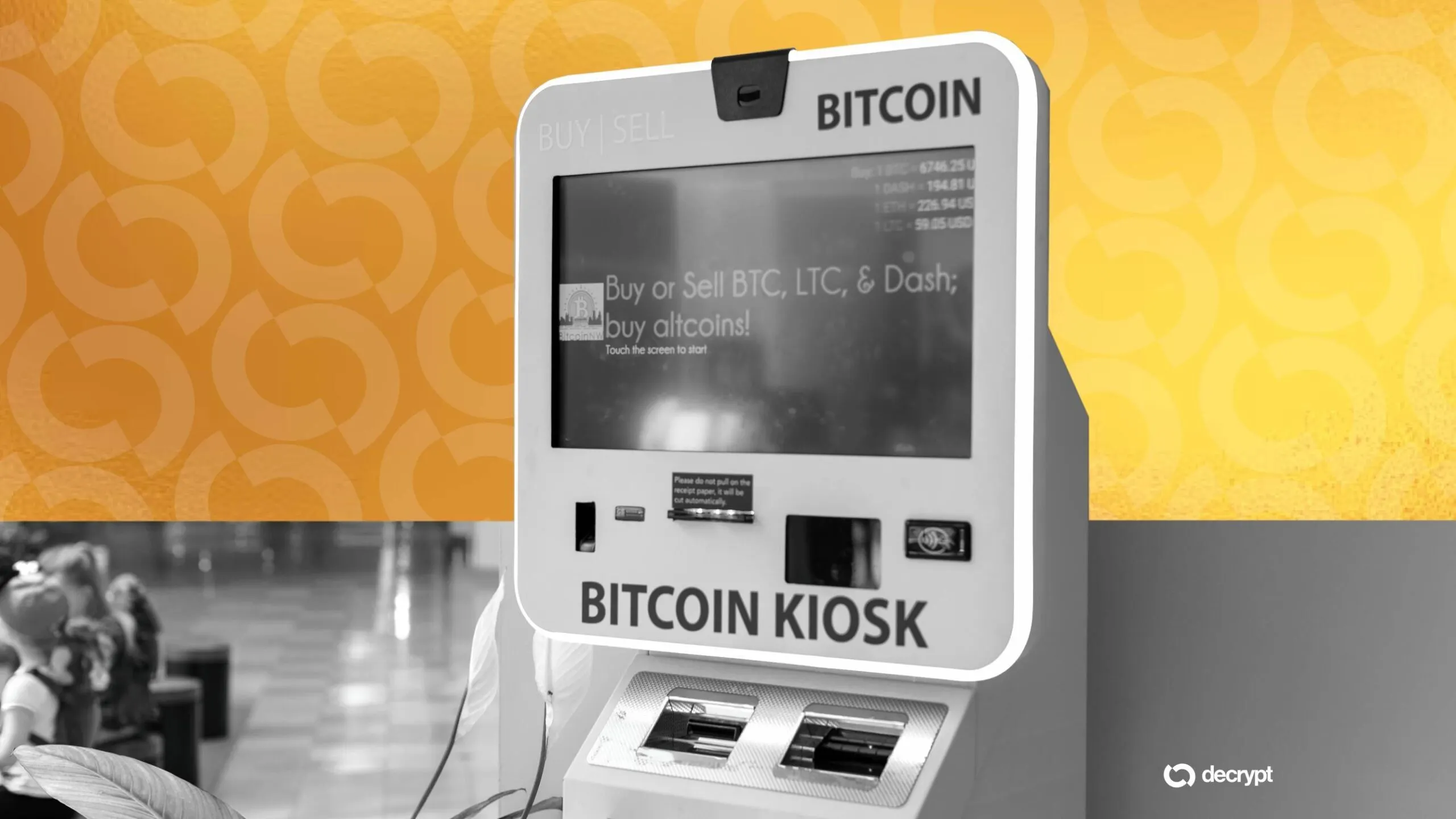
    These kiosks, commonly found in gas stations and convenience stores, allow users to convert cash into cryptocurrency. The Texas Tribune estimates there are approximately 4,000 such machines operating across the state. Scammers frequently coerce victims into withdrawing funds from their bank accounts and feeding the cash into these kiosks.

    Lawmakers Grapple with Crypto Fraud

    The House Committee on Homeland Security, Public Safety and Veterans’ Affairs, which had convened to discuss foreign financial influence, quickly turned its attention to cryptocurrency fraud. “In my career, I’ve never seen a more efficient, cleaner way to steal money,” stated Rep. AJ Louderback. Kelley Currie, a fellow at the Atlantic Council, informed the committee that Interpol now categorizes scamming as an industry on par with drug and human trafficking.

    Currie further alleged that the gas station kiosks are “run by Chinese money launderers.” While the Justice Department has brought charges against Chinese nationals in connection with cryptocurrency fraud operations in Southeast Asia and prosecuted Chinese money laundering networks involved in moving scam proceeds, it has not publicly stated that these groups are generally operating the kiosks.

    Recovery Efforts Prove Difficult

    Jesse Saucillo, deputy commissioner at the Texas Department of Banking, explained that once funds are moved, recovery is nearly impossible. He noted that the money typically goes to an unhosted wallet, which then “gets into a mixer” and beyond, making it “very hard to get any of that back.” Saucillo also pointed out that AI-generated impersonations of police and state agencies are making the initial scam calls more convincing.

    States Implement Varying Regulations

    According to AARP, approximately 30 states have enacted legislation related to crypto kiosks since 2023. South Dakota has implemented transaction caps of $1,000 per day and $10,000 per month, along with a requirement for full refunds for fraud victims. Wisconsin and Virginia have similar caps in place. In Maine, the state regulator secured a $1.9 million settlement from Bitcoin Depot to reimburse victims.

    Indiana became the first state to ban these machines outright in March, enacting a law that empowers the attorney general to sue both operators and the businesses hosting them. Nearly 900 kiosks were operational in Indiana when the governor signed the legislation. Tennessee and Minnesota have since followed suit.

    Texas Considers Stronger Measures

    Committee chair Rep. Cole Hefner indicated that Texas would explore “doing more than regulating them,” hinting at forthcoming legislation. “I got a pretty good idea coming down,” he told colleagues. “And it’s kind of simple, but kind of abrupt.”