Tag: Negative

  • Cardano Hits 5-Year Low Amid Hoskinson’s ‘Wave of Failures’ Warning

    Cardano Hits 5-Year Low Amid Hoskinson’s ‘Wave of Failures’ Warning

    Cardano Founder Warns of Ecosystem Collapse Amid Market Downturn

    The recent sunsetting of Cardano analytics firm TapTools has prompted network founder Charles Hoskinson to issue a stark warning: more companies within the Cardano ecosystem are likely to cease operations this year as market pressures intensify, impacting both Cardano (ADA) and the broader cryptocurrency landscape.

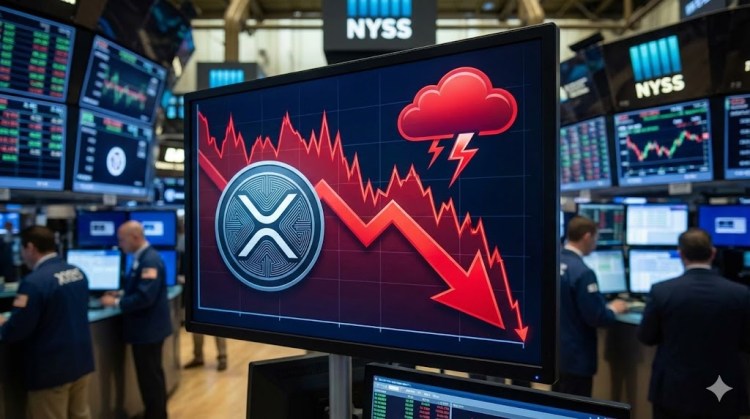
    The network’s native token, ADA, has seen a further 6% decline in the last 24 hours, recently trading at $0.20. This marks a price point not seen in over five years for one of the most prominent tokens in the crypto space. ADA is now down approximately 70% over the past year and has fallen more than 93% from its all-time high of $3.09, which was set in 2021.

    “This is where we’re at as an ecosystem,” Hoskinson stated in a passionate monologue posted to his YouTube channel on Tuesday.

    “I said at the beginning of the year, we’re going to see a lot of people collapse because the markets are really bad,” he continued, adding, “There’s going to be a wave of failures in the ecosystem.”

    Hoskinson, the founder of Cardano and a co-founder of Ethereum, is actively seeking solutions but admitted he is “not exactly sure what my role or place is to resolve this.”

    “I don’t have any special powers with Cardano,” he asserted, urging viewers and Cardano enthusiasts to shift their focus from blaming him for the network’s challenges to actively seeking “a vision, a strategy, and fix it.”

    Failure to do so, he cautioned, will lead to further setbacks.

    Ecosystem Challenges and Resistance

    “For months, if not years, I outlined various things we need to do as an ecosystem to prevent these things from happening,” Hoskinson explained, referencing his past attempts to acquire and commercialize applications within the ecosystem.

    However, he claims these initiatives were met with resistance. Similarly, efforts to utilize funds from the Cardano Foundation’s ADA treasury to support its decentralized application ecosystem have also faced hurdles. Most recently, the community voted against hosting the annual Cardano Summit.

    “There doesn’t seem to be a lot of community desire to spend the treasury to take these ventures to the next level,” Hoskinson observed.

    For TapTools, the decision to conclude its four years of development on the network was driven by the economic realities of ongoing building, maintenance, and support.

    “The economics of running a platform like this remain challenging. Infrastructure costs are real. Development costs are real. Support costs are real. Operating a platform that serves the ecosystem at scale is expensive,” the firm stated in its announcement on X. It further explained that it could not responsibly commit to the future under the prevailing circumstances.

    Hoskinson believes that without significant changes, more decentralized finance (DeFi) applications within the ecosystem will falter, leading to consolidation.

    “We as an ecosystem have no reason to lose,” he declared. “We have the technology, we have the philosophy.”

    “There’s people, good people, but we’re losing them,” he added. “It’s not Charles Hoskinson driving them out. It’s the economic reality driving them out.”

  • Weisenthal: 12 Reasons for Crypto’s Deepest Winter

    Weisenthal: 12 Reasons for Crypto’s Deepest Winter

    Bloomberg’s Joe Weisenthal has reignited and expanded his thesis that the cryptocurrency market is mired in what he terms the “coldest crypto winter ever.” His argument, now comprising 12 points, extends beyond mere price fluctuations to encompass market psychology, capital flows, regulatory landscapes, and the burgeoning influence of artificial intelligence and quantum computing.

    In his Odd Lots newsletter and subsequent posts on X, Weisenthal elaborated on his earlier assertion from February, which outlined 10 reasons for the current downturn’s unusual severity. “Everything I cited then still holds,” he stated, adding that two additional factors have since exacerbated the bleak outlook.

    Crypto’s Problem Extends Beyond Its Own Market

    The crux of Weisenthal’s argument is that crypto’s current weakness is occurring precisely when other speculative market segments are experiencing significant gains. This divergence is crucial. A bear market is one thing when risk assets are broadly under pressure; it is an entirely different proposition when investors witness adjacent trades soaring.

    One chart presented in the newsletter illustrated a sharp resurgence in the Goldman Sachs non-profitable tech basket. Kevin Gordon, head of macro research and strategy at Schwab Center for Financial Research, observed that this basket is “mooning again” in a manner reminiscent of the 2021 boom. Another chart highlighted the Goldman Sachs US quantum computing basket, which has also seen a substantial rise following a dramatic rally.

    For Weisenthal, this makes crypto’s stagnation all the more painful. “First, other people are making SO MUCH MONEY,” he wrote, pointing to listed Nasdaq companies and other equities that have surged in recent months. He specifically cited SK Hynix, up over 250% year-to-date, and Micron, up more than 260%, arguing that such gains amplify the perception among crypto participants that they are missing out on the market’s primary opportunities. He encapsulated this sentiment with a reference to a famous New York Times headline: “Everyone Is Getting Hilariously Rich and You’re Not.”

    The Original 10-Point Case

    Weisenthal’s initial February argument, as summarized in the newsletter, posited that the current drawdown is occurring amidst rising anxiety about the U.S. dollar, thereby undermining one of crypto’s traditional macroeconomic narratives. He also contended that crypto can no longer credibly claim to be in its nascent stages, with “crypto Twitter is dead” and institutional adoption having already occurred, diminishing expectations of a future adoption wave.

    Furthermore, the regulatory environment, in his view, is no longer a clear future tailwind. He wrote that the current climate is already “about as favorable as it gets,” suggesting that market participants may have limited room to anticipate a significant policy-driven recovery.

    Competition for Attention and Resources

    Another significant factor is the competition for attention and capital from the artificial intelligence boom. Weisenthal noted that the AI surge is not only straining electricity resources, which directly impacts miners, but is also capturing “all the mental market share.” In his analysis, crypto no longer appears to be the definitive frontier trade for technology-focused investors.

    The list also included concerns regarding crypto’s reputation and structural issues. Weisenthal wrote that crypto is “Epstein-adjacent,” referencing its mention in the Epstein files, and highlighted growing apprehension about quantum computing and its potential implications for Bitcoin’s security model. He also singled out digital asset treasury companies, including Strategy, arguing that firms which had previously accumulated Bitcoin are now transitioning to sellers rather than buyers. He pointed to Strategy’s announcement of selling 32 bitcoins as a symbolic reversal for a company long associated with corporate Bitcoin accumulation.

    FOMO Without Crypto

    The two new points introduced by Weisenthal reinforce the overarching theme: crypto is not merely declining; it is being left behind. Weisenthal suggested that a month prior, he might have characterized individual stock rallies as occurring without a broader speculative mania. Now, he believes, the market is increasingly resembling “some real FOMO everything rally.”

    This represents a more pointed claim. If AI, quantum computing, and speculative tech are rallying while crypto remains stagnant, then crypto’s challenges extend beyond liquidity, regulation, or price momentum. They touch upon its very relevance. For a sector that was partly built on being the highest-beta expression of technological change and monetary skepticism, losing the attention trade may be the most unsettling signal of this prolonged winter.

    At press time, the total cryptocurrency market capitalization stood at $2.3 trillion.

  • Bitwise CEO: Crypto’s Reign as ‘Belle of the Ball’ Over

    Bitwise CEO: Crypto’s Reign as ‘Belle of the Ball’ Over

    Crypto Market Shifts from “Belle of the Ball” to Contrarian Bet, Says Bitwise CIO

    The cryptocurrency market, once the darling of investors, is now a “brutal” environment and has transformed into a contrarian investment, according to Matt Hougan, Chief Investment Officer at Bitwise. In a recent memo, Hougan outlined three key factors contributing to this shift.

    Fading Enthusiasm and AI’s Dominance

    The primary challenge for digital assets is a struggle to attract investor enthusiasm, as prices remain under pressure and market momentum wanes. This year, Bitcoin has seen a 24% decline, Ethereum is down 36%, Solana has fallen 40%, and XRP has dropped 32%. Concurrently, exchange-traded funds have experienced outflows, and spot trading volumes have hit multi-year lows.

    Hougan attributes some of this weakness to a growing investor preference for artificial intelligence-related opportunities. These include AI stocks, robotics companies, and private firms like SpaceX. In contrast, the Nasdaq-100 has surged 43% year-over-year.

    The Bitwise executive explained that the overwhelming success of AI investments has compelled the crypto market to evolve. It has moved away from being a momentum-driven investment fueled by excitement, and is now a “contrarian” bet that demands patience, a long-term outlook, and a focus on underlying fundamentals. This pivot, he noted, is why investors are increasingly scrutinizing revenues and favoring projects with clear fundamentals, citing Hyperliquid as an example.

    Regulatory Uncertainty Dampens Institutional Interest

    Hougan emphasized that crypto is not disappearing but is changing the profile of investors and projects it rewards. The second significant factor impacting the market is the uncertainty surrounding the Clarity Act, a proposed bill aimed at establishing a comprehensive regulatory framework for cryptocurrencies in the United States. Despite clearing a hurdle in the Senate, Hougan pointed out that prediction market Polymarket currently estimates only a 55% chance of its approval before the end of the year.

    Insiders in Washington D.C. have provided Hougan with passage probability estimates ranging from a mere 5% to 30%. This ambiguity, he stated, is deterring institutional investors. These investors face a choice: allocate capital to rapidly appreciating AI assets or invest in crypto, knowing there’s a significant risk of a major regulatory setback.

    Hougan argued that large-cap crypto assets are unlikely to see a sustainable rally until this regulatory uncertainty is resolved. He stressed that the resolution itself is more critical than the specific outcome, as the crypto industry can adapt to either the passage or failure of the legislation, but struggles to thrive amidst prolonged ambiguity.

    A Shift Towards Fundamentals in Bear Market

    Looking at the broader market trend, Hougan observed that the current downturn differs from previous crypto bear markets. Instead of rotating into Bitcoin, investors are now gravitating towards smaller, less established cryptocurrencies that possess “credible fundamentals.” He highlighted one-month gains of 73% for Hyperliquid, 50% for Zcash, and 44% for Stellar, even as larger assets declined.

    This rotation, Hougan suggested, demonstrates the increasing importance of fundamentals as crypto moves away from momentum-driven trading. He posited that this could indicate the market is “closer to the end of this winter than the beginning,” while acknowledging that the immediate weeks ahead could remain “painful.”

    However, not all market observers share Hougan’s optimistic outlook. Analyst Doctor Profit has consistently warned that the worst may still be yet to come, predicting that Bitcoin could enter a capitulation phase below $60,000 and ultimately bottom out in the $40,000-$50,000 range between September and October 2026.

    Meanwhile, CryptoQuant CEO Ki Young Ju cautioned that the current bear market could potentially extend into early 2027.

  • Santos Faces DOJ, CFTC Scrutiny Over State of the Union Trades

    Santos Faces DOJ, CFTC Scrutiny Over State of the Union Trades

    Federal Agencies Investigate George Santos’ Alleged Prediction Market Trades

    Two federal agencies are reportedly examining trades that former Congressman George Santos allegedly made on the prediction market Kalshi, betting against his own attendance at President Donald Trump’s State of the Union address, even as he publicly stated his intention to be present.

    NPR reported that Kalshi identified the activity, suspended Santos’ account, and subsequently referred the case to both the Commodity Futures Trading Commission (CFTC) and the Department of Justice. Two individuals familiar with the exchange’s internal review shared this information with the outlet.

    According to NPR, which cited three individuals with direct knowledge of the trades who were not authorized to speak publicly, Santos profited tens of thousands of dollars by misleading bettors about his plans for the February event.

    The allegations against Santos emerge amid increasing scrutiny of prediction markets nationwide. Concerns about insider trading have already led to criminal charges and calls for enhanced regulatory oversight.

    The day before President Trump’s State of the Union address, Santos tweeted, “I’m going to be there for the State of Union in the gallery, guys,” which would have increased the perceived likelihood of his attendance. However, during the speech, he posted, “Watching SOTU from an airport tv was not part of the plan! FML,” as sources told NPR that he had already placed a wager against his own appearance.

    When questioned about the probe, Santos told NPR, “Well, that’s news to me,” and declined to confirm or deny possessing a Kalshi account, stating, “I’m not saying yes, I’m not saying no.”

    George Santos, the CFTC, the DOJ, and Kalshi did not immediately respond to requests for comment.

    This development follows recent legal actions in the prediction market sector. Last month, federal prosecutors charged Google engineer Michele Spagnuolo with commodities fraud, wire fraud, and money laundering in connection with approximately $2.75 million in Polymarket bets that allegedly yielded about $1.2 million. The bets were reportedly placed using confidential internal “Year in Search” data. This marked the second federal prosecution linked to the sector, following Army Master Sergeant Gannon Ken Van Dyke, who pleaded not guilty to charges of using classified intelligence to win Polymarket bets on the capture of Venezuelan leader Nicolás Maduro.

    Lawmakers have also taken action, with House Oversight Chair James Comer (R-KY) initiating an insider trading investigation into Kalshi and Polymarket. The committee has demanded records concerning their Know Your Customer (KYC) controls and war-related markets, following a New York Times review that flagged over 80 suspicious Polymarket trades.

    Yuriy Brisov, a partner at Digital & Analogue Partners, suggested to Decrypt that the allegations against Santos might not fit neatly into traditional insider trading frameworks. Brisov explained that, unlike recent prosecutions, Santos allegedly “misappropriated nothing.” Instead, he characterized the case as appearing “closer to manipulation: move a price with a false signal, then trade against it.”

    “Trading on your own conduct is a category that the inherited rulebook never anticipated,” Brisov stated, noting that existing securities and commodities laws were designed around the misuse of confidential information, not wagers tied to an individual’s own actions.

    Brisov emphasized that prediction markets themselves are not inherently problematic. He suggested that platforms should focus on restricting participants who have the ability to influence outcomes, pointing out that “recent safeguards adopted by Kalshi and Polymarket are ‘why Santos was caught.’”

    In February, Kalshi disclosed that it had fined and suspended an employee of MrBeast and a California political candidate for betting on outcomes they could influence, referring both cases to the CFTC.

    “The lesson here is not that prediction markets are lawless,” Brisov added. “It is that the platforms are the fastest regulators in the room.”

    The former lawmaker has had prior dealings with the cryptocurrency space. Executives from the collapsed exchange FTX, including former co-CEO Ryan Salame, were among the top donors to his 2022 congressional campaign. Two years later, Santos briefly backed a Solana meme coin before abruptly distancing himself from the project.

    The New York Republican was sworn into Congress in January 2023, following a campaign that was later found to contain numerous fabrications about his personal and professional history. Federal prosecutors indicted him in May 2023 on charges including wire fraud, money laundering, and theft from campaign donors. He was expelled from Congress in December 2023 and later sentenced to more than seven years in federal prison.

    President Trump commuted Santos’ sentence last October, leading to his release after four months of incarceration.

  • Pi Network Token Nears All-Time Low Amid Gaming Gains

    Pi Network Token Nears All-Time Low Amid Gaming Gains

    Pi Network Token Nears All-Time Low Amid Market Downturn

    The native token of Pi Network is experiencing a significant downturn, mirroring the broader cryptocurrency market’s struggles. The token’s price has fallen sharply, approaching its all-time low recorded in February, despite recent project developments and the release of new games aimed at its user base, known as Pioneers.

    The past week has been particularly challenging for cryptocurrency markets. Bitcoin (BTC) saw a substantial drop to just over $65,000, while Ethereum (ETH) plunged to $1,800. Most altcoins have followed suit, and PI has not been an exception. The token has declined by 22% over the past month, reaching $0.136 earlier today, its lowest point since February.

    In February, PI faced repeated rejections at the $0.20 mark, leading to an all-time low of $0.1312. The subsequent month saw a significant recovery, with PI more than doubling in value by “PiDay 2026” (March 14) after its listing on Kraken. However, this surge proved to be a classic “sell the news” event, followed by a substantial crash to below $0.18.

    Today’s drop below $0.14 occurred amidst sustained selling pressure and the loss of several key support levels, including $0.18 and $0.16.

    Data from PiScan indicates that the average daily number of tokens scheduled for release in the coming month is relatively modest, around 5.4 million. However, certain days are expected to see unlockings exceeding 10 million tokens, with one day slated for 16 million. These substantial unlocks could potentially intensify immediate selling pressure and contribute to further price declines.

    In parallel with these market movements, CiDi Games, a company within the Pi Network Ventures portfolio, recently announced the upcoming launch of new games for Pioneers. A portion of these games has already been made available.

    CiDi Games aims to provide Pioneers with new avenues to utilize Pi through gaming, while simultaneously expanding the Pi ecosystem with infrastructure designed to support a growing number of games and developers over time.

    The newly released games include:

    • Coin Whack, an arcade roguelike.
    • Fruit Stack, a match-3 fruit puzzle.
    • Gemnova, a cosmic match-3 adventure.
    • RainbowCubes, a colorful elimination puzzle.

    Separately, the Pi Network Core Team recently confirmed the successful deployment of protocol update version 23. The next update, version 24, was anticipated to be completed by June 2, though official confirmation was pending at the time of reporting.

  • Crypto Plummets Amidst Middle East Tensions

    Crypto Plummets Amidst Middle East Tensions

    Crypto Plummets as Geopolitical Tensions Flare

    Cryptocurrencies experienced a sharp overnight decline, with over $700 million in leveraged long positions being forcibly liquidated within a 12-hour period. The sell-off was triggered by Iranian strikes on Kuwait’s international airport and escalating conflict in the Strait of Hormuz, which sent risk assets spiraling.

    Bitcoin saw a significant drop, approaching critical support levels, and the total cryptocurrency market capitalization fell to $2.31 trillion.

    Traders seeking an explanation for the steep downturn were met with a stark, two-part answer: a geopolitical shock and a pre-existing leverage overhang that was ripe for a cascade.

    A Confluence of Vulnerabilities

    The market’s vulnerability was amplified by elevated open interest across perpetual futures markets, a situation that had been building for weeks. This created a structurally fragile environment.

    The subsequent Iranian drone strike on Kuwait International Airport, reportedly causing severe damage, fires, and structural collapses, served as the exogenous trigger. This was compounded by a U.S. military response targeting Qeshm Island in the Strait of Hormuz. Bitcoin had already been under pressure due to geopolitical tensions and leverage, and this event acted as the catalyst for a full liquidation.

    Escalation in the Strait of Hormuz

    The drone attack on Kuwait’s international airport, which resulted in significant damage, injuries, and the suspension of air traffic, was the immediate flashpoint. Kuwait’s Ministry of Defence spokesman described the incident as “criminal Iranian aggression.”

    In response, U.S. Central Command conducted strikes on an Iranian military ground control station on Qeshm Island, located deep within the Strait of Hormuz. The Islamic Revolutionary Guard Corps (IRGC) issued a warning that “disrupting the security of the Strait of Hormuz will carry a heavy price for the aggressive US military.” This threat prompted immediate repricing of risk across markets.

    The Strait of Hormuz is a vital artery for global energy, carrying approximately 20–30% of the world’s seaborne oil trade. Any sustained disruption there has global implications for energy prices. Oil prices surged on the news of the escalation, the U.S. dollar strengthened as a safe-haven asset, and Treasury bonds also saw increased demand.

    This trifecta of rising oil prices, a stronger dollar, and demand for bonds represents a classic risk-off rotation, historically draining liquidity from speculative assets. Despite narratives of Bitcoin as “digital gold,” the cryptocurrency continues to trade as a high-beta risk asset during periods of significant geopolitical stress, exhibiting a strong correlation with the Nasdaq rather than gold.

    Technical Damage and Future Outlook

    The technical damage from this episode is considerable. Bitcoin has fallen below the Short-Term Holder Realized Price support, a level historically considered a dividing line between healthy consolidation and sustained downturns. The psychological $70,000 floor was breached during the liquidation flush, and the total crypto market cap is now testing the $2 trillion threshold.

    The path forward for cryptocurrencies hinges on de-escalation. If U.S.-Iran back-channel talks resume meaningfully, shipping risk premiums in the Strait of Hormuz subside, and exchange-traded fund (ETF) inflows return within 48 to 72 hours, Bitcoin could reclaim $70,000, triggering short squeezes and potentially pushing prices toward $74,000 to $75,000. However, such a scenario requires de-escalation signals that are currently absent.

    Should geopolitical tensions persist without further direct escalation, cryptocurrencies may consolidate in the $66,000 to $70,000 range as leveraged positions reset and macro traders await further U.S. inflation data. The Federal Reserve’s higher-for-longer interest rate stance is expected to cap upside potential even in this scenario.

    Any further Iranian strikes, a significant shipping incident in the Strait of Hormuz involving a major tanker, or an unexpected surge in inflation could push Bitcoin below $65,000. This would break the range structure that has held since early 2026 and could lead to a move toward $60,000 to $62,000, a scenario that traders are reportedly stress-testing.

    The current structural outlook remains bearish until Bitcoin reclaims $70,000 on a closing basis. Any price action below this level is considered damage control territory.

  • XRP Price Drops Below Key Support, Further Decline Possible

    XRP Price Drops Below Key Support, Further Decline Possible

    XRP Price Suffers Significant Losses, Breaking Key Support Levels

    XRP is experiencing a sharp decline, trading between $1.21 and $1.24, marking a 2% drop today and a concerning 7% decrease over the past week. This sell-off has intensified since earlier this week, extending a downtrend that began in mid-May when XRP reached a local peak of $1.55. Since then, the token has fallen through a critical support zone, hitting its lowest price since February.

    XRP ETFs Continue Inflows Amidst Broader Market Downturn

    Despite the broader market’s struggles, XRP Exchange-Traded Funds (ETFs) have not seen a single red day since April. Data from SoSoValueCrypto indicates that XRP spot ETFs attracted an additional $4.13 million on June 1, continuing a streak of positive inflows throughout May. The last recorded outflow for these ETFs occurred at an unspecified earlier date.

    Cumulative Drawdown and Market-Wide Correction

    The cumulative drawdown for XRP now exceeds 66% from its all-time high last year. However, this decline is not isolated; the total cryptocurrency market capitalization has plummeted from over $4 trillion to $2.4 trillion, with most altcoins experiencing double-digit losses, mirroring XRP’s performance.

    Discrepancy Between Fundamentals and Price Action

    The current price action for XRP appears unusual given its underlying fundamentals. In May alone, spot XRP ETFs garnered over $131 million, marking their strongest monthly performance this year. Furthermore, Ripple’s RLUSD stablecoin boasts over $1.8 billion in Assets Under Management (AUM) and $22 billion in 30-day volume. This suggests a disconnect between strong fundamental indicators and the token’s depreciating price.

    Technical Analysis and Potential Price Targets

    XRP’s price has broken through a crucial support level and has yet to reclaim it. The $1.20 zone, which previously served as consolidation support throughout the first quarter, is now a critical level to monitor. A confirmed daily close below this figure could pave the way for a further decline towards the $1.00–$1.05 range, a level last tested in late 2024. On the upside, the former support around $1.40–$1.45 has now transitioned into resistance. Reclaiming this level would be a prerequisite for any significant bullish recovery.

    Near-Term Scenarios for XRP

    Three potential scenarios are shaping XRP’s near-term trajectory. In an optimistic outlook, accelerated ETF inflows and a positive shift in market sentiment could see XRP reclaim the $1.40 level within two weeks, potentially initiating a recovery. Alternatively, the token might trade sideways between $1.20 and $1.35 as the broader market stabilizes.

    The most bearish scenario involves the $1.20 floor breaking, triggering momentum selling and potentially pushing the token below $1.10. Current momentum indicators appear to favor this bearish outlook.

    Long-Term Outlook and Regulatory Wins

    Ripple’s recent regulatory successes, including securing licenses in the UK, Australia, and the EU, coupled with a company valuation of $50 billion, provide a long-term foundation for sentiment. While AI-driven price models remain bullish on a 12-month horizon, near-term technicals suggest a need for caution.

    Market Insights and Emerging Opportunities

    The significant weekly decline of a major-cap asset like XRP, even with institutional ETF demand, underscores that size does not guarantee safety in the current market cycle. This situation highlights a potential strategy of rotating into earlier-stage infrastructure projects before institutional price discovery begins.

    One such project, LiquidChain ($LIQUID), is a Layer 3 infrastructure initiative aiming to serve as a cross-chain liquidity layer for the next market cycle. Its core objective is to consolidate liquidity from Bitcoin, Ethereum, and Solana into a unified execution environment, enabling developers to deploy applications across all three ecosystems simultaneously with a single deployment.

    LiquidChain’s architecture features a Unified Liquidity Layer, Single-Step Execution, Verifiable Settlement, and a Deploy-Once Architecture, designed to address the fragmentation that currently complicates and increases the cost of cross-chain development.

    The LiquidChain presale is currently live, with the $LIQUID token priced at $0.01466 and having raised $820,000 to date.

  • XRP Falls Below Triangle, Eyes $1.14 Target

    XRP Falls Below Triangle, Eyes $1.14 Target

    XRP Drops Below Key Technical Pattern, Analyst Sets $1.14 Target

    Cryptocurrency analyst Ali Martinez has pointed to a recent technical development for XRP, noting that the digital asset has broken below a symmetrical triangle pattern. This breakdown, according to Martinez, could signal a potential price target of $1.14.

    Symmetrical Triangle Breakdown

    In a recent post on X, Martinez discussed a symmetrical triangle pattern that had been forming on XRP’s daily price chart prior to its recent downturn. A symmetrical triangle is a technical analysis formation characterized by two converging trendlines, with the upper line acting as resistance and the lower line as support. The pattern typically indicates a period of consolidation before a significant price move.

    The key characteristic of a symmetrical triangle is that its trendlines approach each other with roughly equal and opposite slopes, causing the trading range to narrow over time. A breakout above the resistance line or below the support line is often interpreted as a signal for a continuation of the prevailing trend.

    Martinez shared a chart illustrating the symmetrical triangle that had been shaping XRP’s price action. The data showed XRP trading within this pattern for several months. However, as the trading range tightened in May, a breakout occurred. This breakout, unfortunately for XRP holders, was to the downside, with the price slipping below the established support level.

    As per technical analysis principles, a breakdown below the support of a symmetrical triangle can be a bearish indicator, suggesting a continuation of the downward trend. The chart shared by Martinez appears to confirm this, showing bearish momentum persisting since the support level gave way. Based on this pattern and the subsequent price action, Martinez has projected a target of $1.14 for XRP. The market will now watch to see if XRP moves towards this level or if its trajectory reverses.

    Long-Term Parallel Channel

    Martinez also highlighted that the symmetrical triangle was a short-term pattern. In a separate X post, the analyst drew attention to a longer-term pattern: a parallel channel that XRP’s monthly price has potentially been confined within for years.

    A parallel channel consists of two trendlines that run parallel to each other. The chart provided by Martinez indicates that XRP retested the resistance level of this long-term channel in 2025 but was ultimately rejected. Since this reversal, the cryptocurrency has experienced a decline.

    Martinez suggested that if XRP continues to respect this parallel channel, the mid-range of the channel, currently around $0.73, could present an attractive accumulation zone.

    At the time of reporting, XRP was trading around $1.23, marking a nearly 8% decrease over the past seven days.

  • XRP Price Drops Below $1.22 Amidst Negative Market Sentiment

    XRP Price Drops Below $1.22 Amidst Negative Market Sentiment

    XRP Price Slides Below Key Support Levels, Bears in Control

    The price of XRP has extended its losses, trading below the $1.220 mark. The cryptocurrency is currently consolidating its decline, facing immediate resistance hurdles at $1.2350 and $1.250.

    XRP Price Dips Below $1.250

    XRP’s inability to sustain its position above $1.30 has led to a significant downturn, mirroring movements seen in Bitcoin and Ethereum. The digital asset fell below $1.2850 and $1.2650, entering a short-term bearish territory. Losses deepened further, pushing the price below $1.220.

    A low was established at $1.1924. XRP is now consolidating these losses well below the 23.6% Fibonacci retracement level of the move from a swing high of $1.3640 to the recent low of $1.1924. The price is trading below $1.2320 and the 100-hourly Simple Moving Average.

    Should a recovery attempt materialize, XRP could encounter resistance near the $1.2330 level. The first significant resistance zone is situated around $1.2580. A more substantial barrier lies at $1.2780, which also corresponds to the 50% Fibonacci retracement level of the aforementioned downward swing. A decisive close above $1.2780 could propel XRP towards $1.2850, with the next hurdle at $1.2880.

    A bearish trend line is forming on the hourly chart of the XRP/USD pair, with resistance at $1.2850. A clear break above the $1.2880 resistance could pave the way for a move towards the $1.30 level. Further gains might see XRP target the $1.3250 resistance.

    More Losses on the Horizon?

    If XRP fails to overcome the $1.2580 resistance zone, a fresh decline could be initiated. Initial support on the downside is observed near the $1.2050 level, followed by a major support at $1.20. A downside break and a close below $1.20 could lead to further declines towards $1.1920. The next significant support is located around the $1.1880 zone, below which the price could extend lower towards $1.1840.

    Technical Indicators

    The hourly MACD for XRP/USD is currently gaining momentum in the bearish zone. The hourly RSI (Relative Strength Index) is trading below the 50 level, indicating bearish sentiment.

    Major Support Levels: $1.1920 and $1.1840
    Major Resistance Levels: $1.2350 and $1.2580

  • Crypto Treasury Outflows Slow, Hitting Lowest Point Since 2024

    Crypto Treasury Outflows Slow, Hitting Lowest Point Since 2024

    Bitcoin Dominates Crypto Inflows Amid Broader Market Slowdown

    Crypto treasury companies saw their monthly inflows plummet to $180 million in May, marking the weakest performance since October 2024. Bitcoin-linked firms were the primary drivers of this figure, accounting for $177 million. Smaller contributions came from ZCash, Story, and Sui, while Litecoin experienced an outflow of $1.89 million.

    This sharp decline represents a 95% drop from April’s $4.4 billion and is approximately 93% below the monthly average recorded between January and May. The figures for March and April each surpassed $4 billion, highlighting the significant slowdown.

    Post-Election Surge Fades for Treasury Firms

    The recent dip follows a robust surge in investment late last year, when digital asset inflows exceeded $12 billion, spurred by the 2024 US election results and a more favorable policy environment. Data from DefiLlama indicates that this trend cooled throughout 2025, remaining below $10 billion monthly until late summer before declining further.

    This cooling market has presented treasury firms with a more challenging proposition. The subsequent market downturn has intensified pressure, and companies that previously relied solely on token accumulation are now facing greater investor scrutiny compared to the boom period.

    Yield Pressure Forces Treasury Firms to Adapt

    Industry leaders suggest that the traditional buy-and-hold strategy is losing its efficacy. Galaxy Digital, for instance, has advocated for treasury firms to actively deploy assets through staking, validator services, DeFi lending, or other revenue-generating activities.

    Patrick Ngan of Zeta Network Group emphasized that companies holding Bitcoin must demonstrate capabilities beyond simply holding the asset on their balance sheets. He noted that businesses with tangible cash flow might be better positioned than those solely focused on asset holdings.

    Arthur Firstov of Mercuryo pointed out that the advent of ETFs offers institutions a cost-effective and liquid avenue for direct crypto exposure. This, he explained, makes it more difficult for publicly listed treasury firms to maintain premium valuations. While staking can generate revenue for proof-of-stake treasuries, Firstov cautioned that it cannot compensate for operational weaknesses, excessive dilution, or balance sheet losses.

    Hybrid Models Emerge as Sector Loses Momentum

    The shift towards more active asset management is already evident in hybrid models. Grant Cardone, for example, has integrated Bitcoin with multifamily housing investments, utilizing rental income and property appreciation to support further Bitcoin acquisitions within a treasury-like structure.

    Current data indicates a significant deceleration in the crypto treasury sector. Although Bitcoin continues to lead the market, the latest figures strongly suggest that the era of easy capital has concluded.